Why Indian Wedding Invitations Matter
From sacred ceremonies to lifelong keepsakes, your invitation is the first chapter of your wedding story.
Honoring Tradition and Family
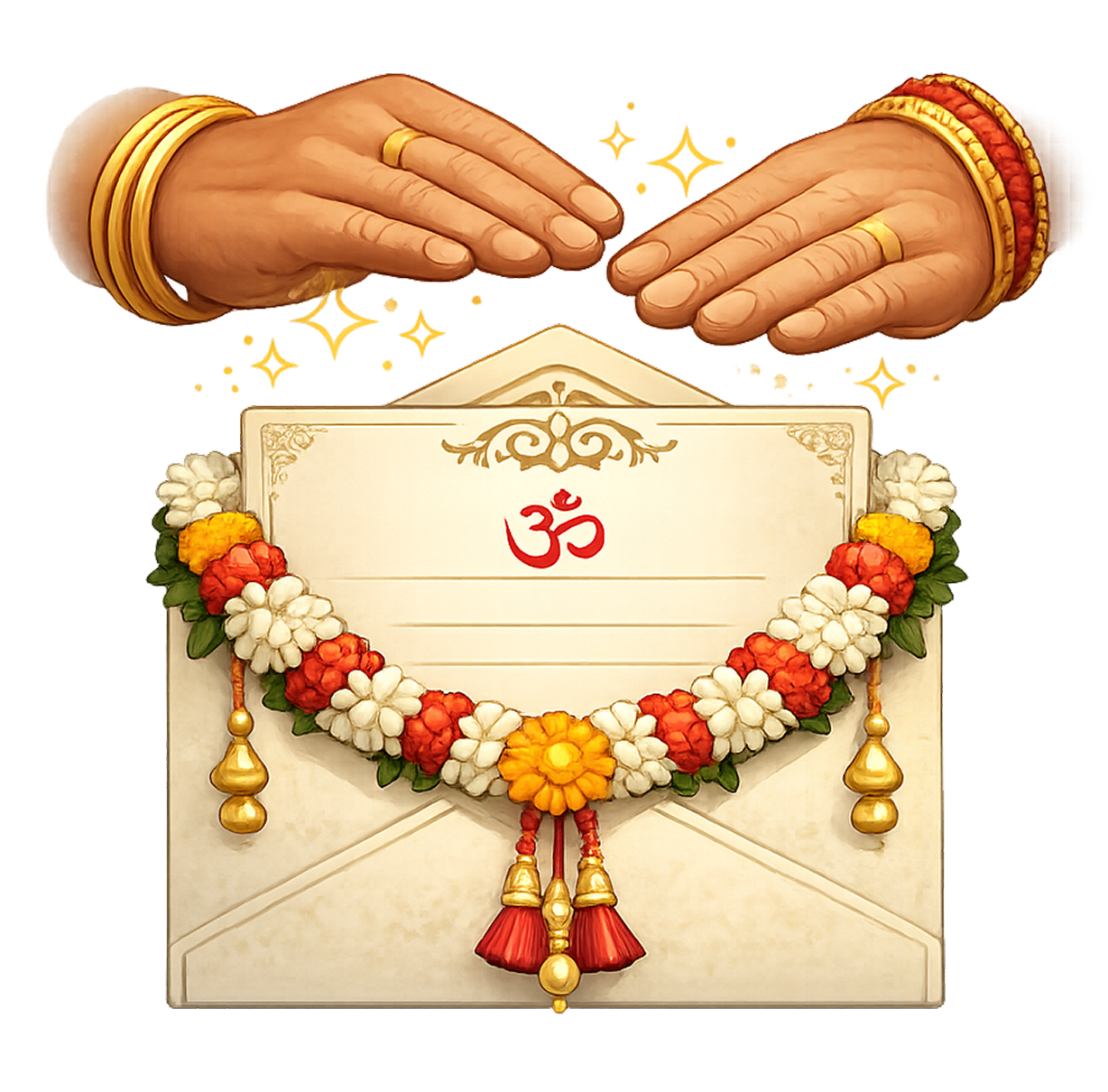
In Hindu culture, a wedding invitation is far more than a notification—it is an auspicious beginning. The invitation card, often blessed and delivered personally, carries the weight of tradition, respect, and familial bonds. Elders in the family view the invitation as a sacred gesture, a tangible symbol of the couple's commitment to honoring customs passed down through generations.
A Keepsake for Generations
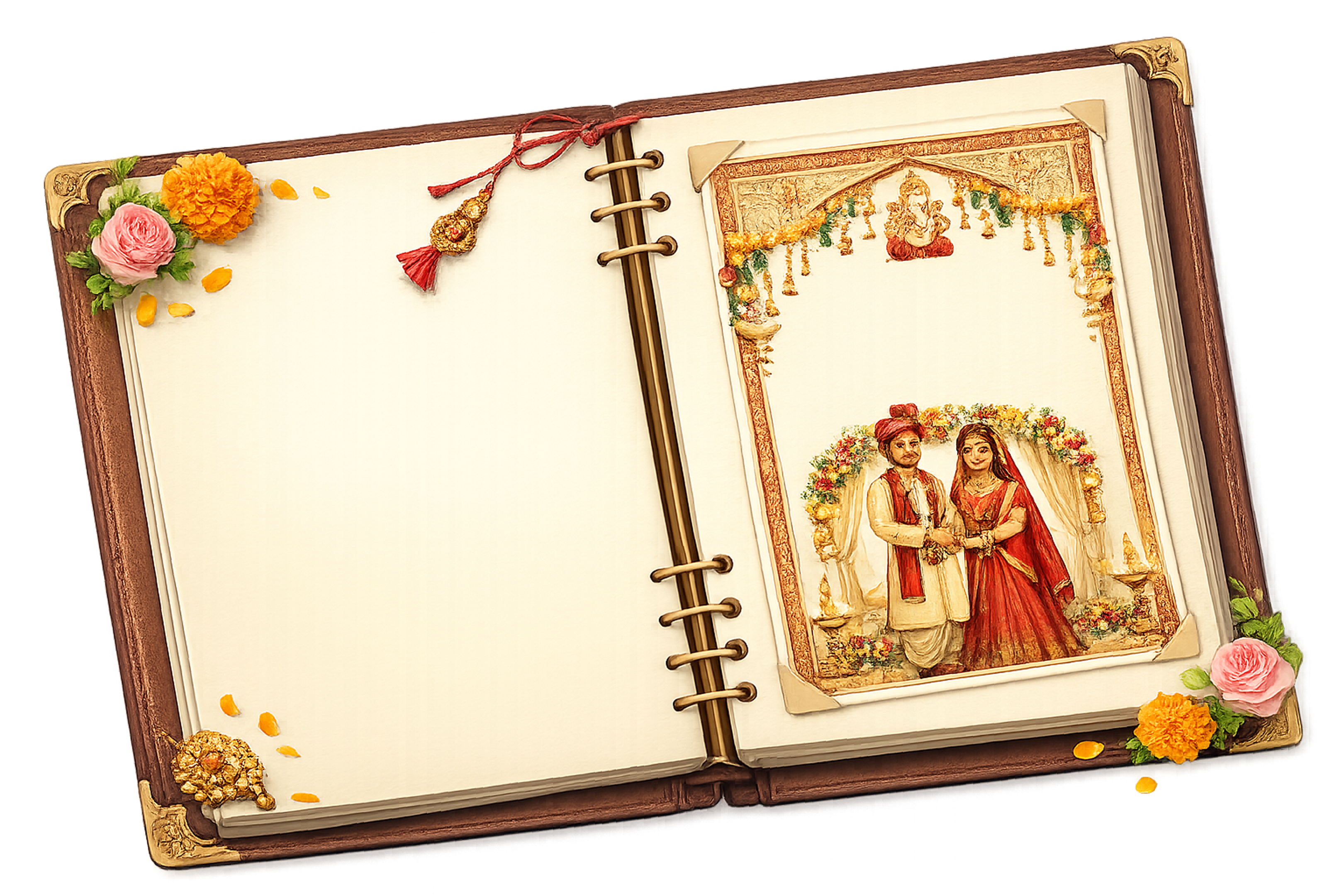
Wedding invitations become cherished keepsakes that tell your love story. Parents frame them, grandparents treasure them, and years later, couples rediscover them with a flood of memories. When you invest in quality Hindu wedding invitations, you're creating a family heirloom.
Essential for Religious Ceremonies
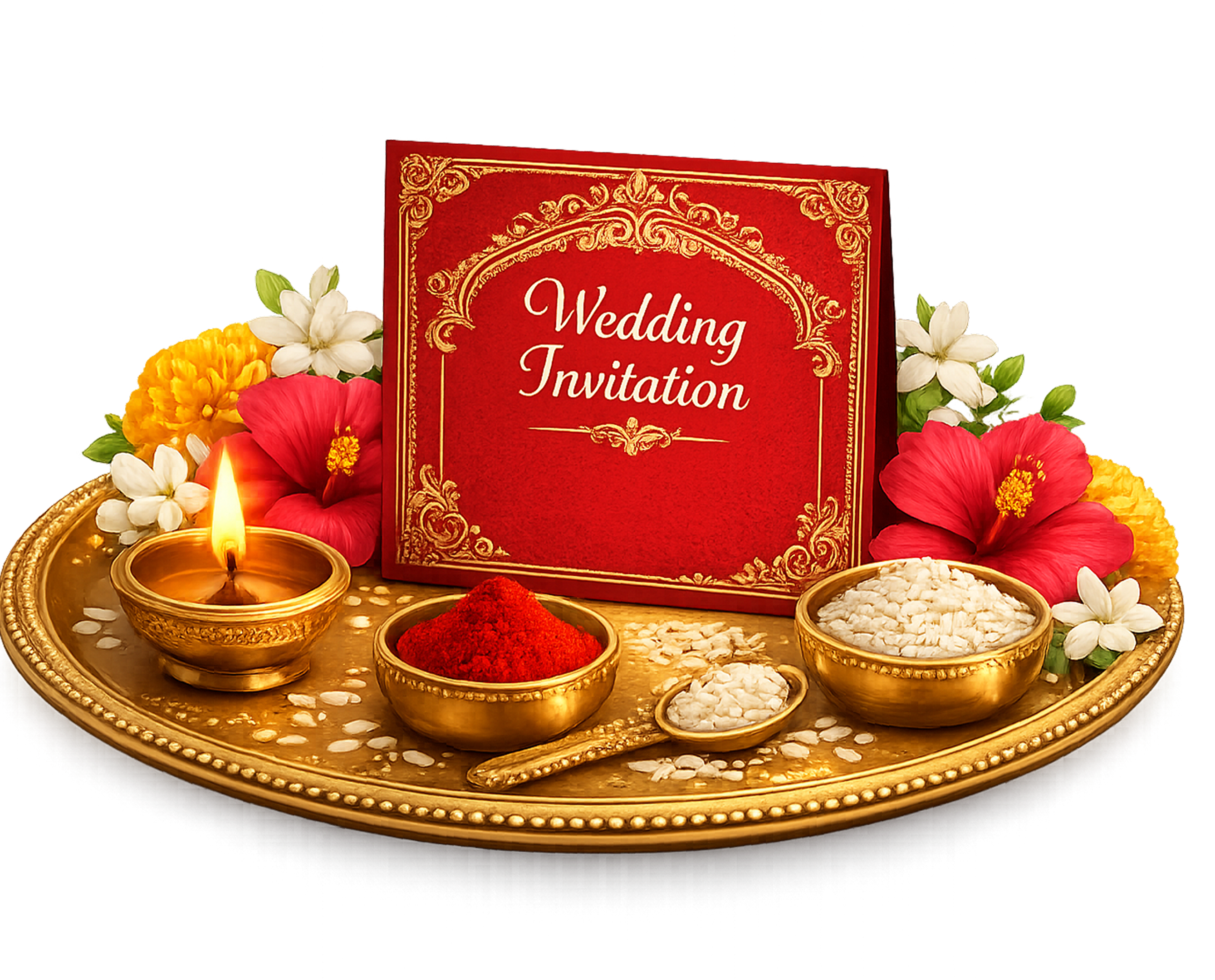
Many Hindu families consider the invitation card integral to pre-wedding rituals. From the Griha Pravesh ceremony to the Roka, having beautifully crafted stationery sets the tone for these sacred occasions. Quality Hindu wedding invitation cards elevate these moments, reflecting the significance of the union being celebrated.

Setting the Tone for Your Celebration
Your wedding stationery is the first impression guests receive of your celebration. It communicates the formality, style, and cultural significance of your event. Whether traditional or contemporary, your invitations should reflect who you are as a couple while honoring the sacred nature of the occasion.
What Goes on a Hindu Wedding Invitation
A well-crafted Hindu wedding invitation includes several key elements that inform guests while honoring tradition. Here's what typically appears on invitations and examples of how to word each section.
Essential Elements of a Indian Wedding Invitation

Religious Invocation
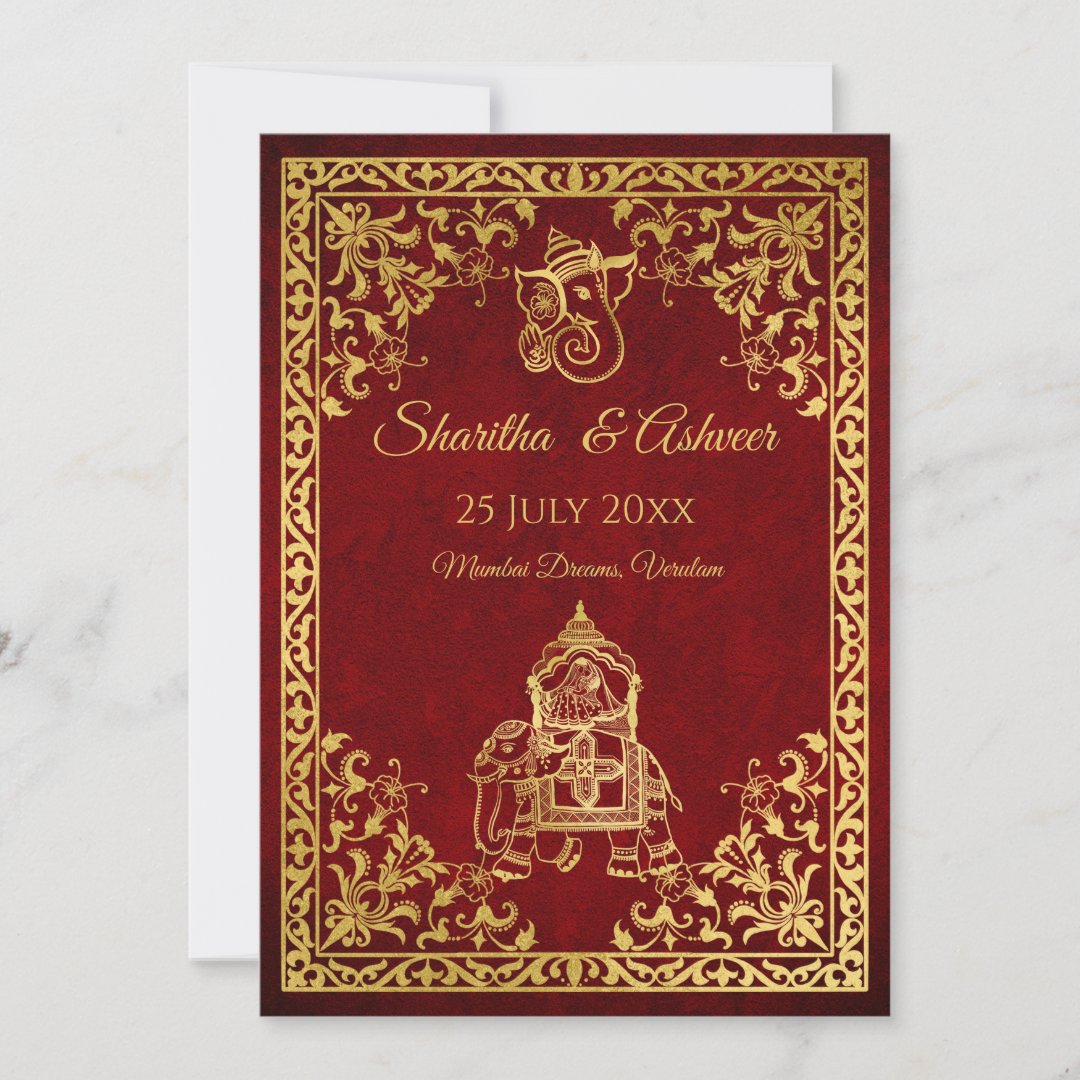
Most Hindu invitations begin with an auspicious symbol or blessing, typically Lord Ganesha (the remover of obstacles) or the sacred Om symbol, followed by a Sanskrit shloka or mantra.
"|| Shri Ganeshaya Namah ||"
"ॐ श्री गणेशाय नमः"
"With the blessings of Lord Ganesha"

Host Line
Traditionally, the parents of the bride and groom extend the invitation. Modern couples may also host together or include both sets of parents equally.
"Mr. & Mrs. Rajesh Sharma and Mr. & Mrs. Vikram Patel request the pleasure of your company..."
"Together with their families, Priya Sharma and Arjun Patel invite you to celebrate their marriage..."
"With joy in our hearts, the families of Sharma and Patel invite you to witness the union of their children..."

Couple's Names
The bride and groom's names are prominently featured, often with their full names including family name. Some invitations include the gotra (clan lineage) for traditional ceremonies.
"Priya, daughter of Rajesh & Sunita Sharma"
"Arjun, son of Vikram & Meera Patel"

Event Details
Clear information about the ceremony date, time, and venue. For multi-day celebrations, separate cards or inserts may detail each event.
"Saturday, the Twenty-Fifth of January, Two Thousand Twenty-Five at Four O'Clock in the Evening"
"Shubh Muhurat: 7:30 PM | The Grand Hyatt, Houston, Texas"

Ceremony Information
Details about the specific rituals being performed, especially helpful for guests unfamiliar with Hindu traditions.
"Hindu Wedding Ceremony followed by Reception"
"Baraat Procession: 4:00 PM | Pheras Ceremony: 5:30 PM | Reception & Dinner: 7:00 PM"

RSVP & Additional Information
Contact details for responses, dress code suggestions, accommodation information, and any special requests.
"Kindly respond by January 10th to priya.arjun2025@gmail.com"
"Traditional Indian attire requested | Vegetarian dinner will be served"
"Please join us in wearing festive colors"
Pro Tip: Work with your stationery designer to customize wording that reflects your family traditions, ceremony style, and personal preferences.
How to Choose the Right Invitation
With countless options for buying Indian wedding invitations, knowing what to evaluate helps you make choices you'll love.
- 1
Paper Quality
Feel samples in person when possible. Quality paper has weight, texture, and durability you can sense immediately.
Questions to Ask:
- "Does the paper feel substantial?"
- "Will it hold up through mailing?"
- "Does it complement the printing technique?"
- 2
Print Method
Match the printing technique to your design aesthetic and budget constraints.
Questions to Ask:
- "Does digital printing meet your quality standards?"
- "Are premium techniques worth the investment for your celebration?"
- "How does the print quality look in actual light?"
- 3
Customization Options
Understand what can be modified and what limitations exist.
Questions to Ask:
- "Can colors be matched to your wedding palette?"
- "What wording flexibility exists?"
- "Can motifs or symbols be adjusted?"
- 4
Delivery Timeline
Confirm realistic production and shipping schedules before committing.
Questions to Ask:
- "What is the standard production time?"
- "Are rush options available if needed?"
- "How is shipping handled and tracked?"
- 5
Reorder Flexibility
Life happens—guest lists change, addresses update. Know your options.
Questions to Ask:
- "Can additional invitations be ordered later?"
- "What is the minimum reorder quantity?"
- "How long are designs kept on file?"
Design Styles That Work Best
From timeless elegance to contemporary minimalism
Common Buying Mistakes to Avoid
Learn from others' experiences
Ordering Too Few Copies
Guest lists grow. Invitations get damaged. You'll want extras for keepsakes, framing, or late additions. Order 15-20% more than your guest count.
Solution: Calculate your guest count, add buffer for mistakes and keepsakes, and round up to the next quantity tier for better pricing.
Skipping the Proof Review
Typos, wrong dates, and misspelled names happen more often than you'd expect. Once printed, corrections mean reprinting at full cost.
Solution: Have at least three people review proofs. Check dates against actual calendars. Read phone numbers aloud to catch transposition errors.
Choosing Design Over Readability
Ornate fonts and busy backgrounds can render essential information difficult to read, especially for older guests.
Solution: Print a test at actual size. Can you read all details from arm's length? Is contrast sufficient? Elegance shouldn't sacrifice clarity.
Forgetting Keepsake Copies
Years from now, you'll want pristine invitations for your memory box, parents' homes, and possibly framing.
Solution: Set aside 5-10 perfect copies immediately upon delivery. Store flat in acid-free tissue away from light and humidity.
Ignoring Envelope Needs
Inner envelopes, outer envelopes, envelope liners—the full presentation adds cost but creates impact.
Solution: Decide your envelope strategy early. Consider whether calligraphy services or addressing labels fit your aesthetic and budget.
Waiting Too Long to Order
Rush fees add up quickly, and options narrow as deadlines tighten. Popular designs and premium techniques book out weeks ahead.
Solution: Start the process 6-8 months before your wedding. Lock in designs and deposits 4-5 months out for best results.
Pro Tips for Success
- Request physical samples before large orders—screens don't show texture or true color
- Verify return and refund policies before purchasing
- Ask about package deals that include save-the-dates or thank you cards
- Consider digital RSVPs paired with physical invitations to save costs
- Keep original design files for potential reorders or thank you cards
Invitation Ordering Timeline
Ordering printed Indian wedding invitations requires more lead time than many couples anticipate. Here's a realistic timeline to ensure everything arrives beautifully and on schedule.
Research & Selection
- Browse designs and collect inspiration
- Determine your invitation suite needs (invitations, inserts, RSVP cards, envelopes)
- Set a realistic budget for printed materials
- Request samples from potential vendors
Finalize Design & Wording
- Choose your final design style and color palette
- Draft complete wording for all pieces
- Confirm guest list numbers for accurate quantity
- Submit design requests and customizations
Proof Review & Approval
- Receive digital proofs for review
- Check every detail: spelling, dates, venues, phone numbers
- Request physical proof if available (especially for luxury orders)
- Approve final designs for production
Production & Delivery
- Allow 2-4 weeks for printing (longer for complex techniques)
- Account for shipping time to your location
- Inspect all delivered items upon arrival
- Address and organize invitations for distribution
Send Invitations
- Mail invitations to out-of-town guests first
- Hand-deliver to close family and elders when possible
- Track RSVPs as they arrive
- Send reminders to non-respondents
Important: Build in buffer time. International shipping, custom elements, and printing complications can cause delays. Rush orders typically cost 30-50% more and offer fewer customization options.
Frequently Asked Questions
Expert answers to common questions about Indian wedding invitations
Ready to Find Your Perfect Indian Wedding Invitations?
MelaMatch is a wedding planning platform helping South Asian couples discover trusted vendors and beautiful products for Hindu weddings and cultural events.
Some links or quote requests on our site may earn us a commission or referral fee at no additional cost to you.
More Planning Resources
Explore our collection of guides and resources.